
.jpg)
.jpg)
.jpg)
.jpg)
.jpg)
.jpg)


.jpg)

.jpg)
.jpg)

.jpg)


.jpg)
.jpg)
.jpg)
.jpg)
.jpg)
.jpg)
.jpg)
.jpg)
.jpg)
.jpg)
.jpg)
.jpg)
.jpg)
.jpg)
.jpg)
.jpg)
.jpg)

.jpg)
.jpg)
.jpg)
.jpg)
The Country
For the right traveller, it offers rarity in the truest sense. Accommodation is typically comfortable rather than ultra-luxe, and the appeal lies in access, ecological significance and authenticity. This is a destination for travellers who prioritise wilderness substance over polish.


KEY FACTS FOR Central African Republic
This is a highly specialised destination best approached with a conservation mindset.
Population Size
Approx. 6.7 million
Geographic Size
Approx. 622,436 sq km
Capital
Bangui
Currency
Central African CFA Franc (XAF)
Offical Language
French and Sango
Best time to visit
December to April for drier forest conditions and easier logistics
01
Dzanga-Sangha forms part of one of Central Africa’s most important rainforest landscapes.
02
Dzanga Bai is one of the best places in Africa to observe forest elephants.
03
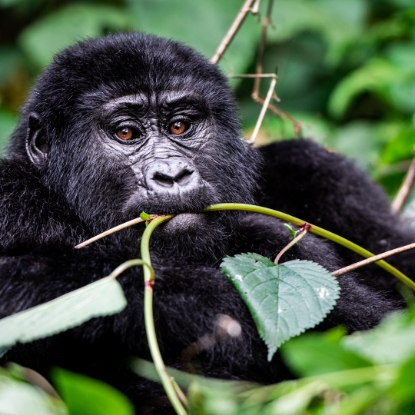
The region is renowned for western lowland gorilla tracking.
04
Ba’Aka forest knowledge adds extraordinary cultural depth to the wilderness experience.
Plan by region
Central African Republic REGIONS
Overview
Reasons to Visit
02
Habitats
Dzanga-Sangha
03
WILDLIFE
Dzanga-Sangha
Western Lowland Gorillas
Forest Elephants
Chimpanzees
Forest Buffalo
Bongo
04
ACTIVITIES
Dzanga-Sangha
Trek through dense lowland rainforest to find habituated western lowland gorilla families.
Watch up to 100 forest elephants gather at the world's great mineral clearing.
Explore the Sangha River system by dugout canoe with specialist guides.
Walk the forest with Ba'Aka guides whose ancestral knowledge of this landscape is unmatched.
Observe traditional Ba'Aka hunting and forest skills through sensitively run cultural programmes.
05
WEATHER
Dzanga-Sangha
- WET SEASON
- DRY SEASON
- Jan
- Feb
- Mar
- Apr
- May
- Jun
- Jul
- Aug
- Sep
- Oct
- Nov
- Dec
Overview
Reasons to Visit
02
Habitats
Dzanga-Sangha
03
WILDLIFE
Dzanga-Sangha
04
ACTIVITIES
Dzanga-Sangha
Trek through dense lowland rainforest to find habituated western lowland gorilla families.
Watch up to 100 forest elephants gather at the world's great mineral clearing.
Explore the Sangha River system by dugout canoe with specialist guides.
Walk the forest with Ba'Aka guides whose ancestral knowledge of this landscape is unmatched.
Observe traditional Ba'Aka hunting and forest skills through sensitively run cultural programmes.
05
WEATHER
Dzanga-Sangha
- WET SEASON
- DRY SEASON
- Jan
- Feb
- Mar
- Apr
- May
- Jun
- Jul
- Aug
- Sep
- Oct
- Nov
- Dec
Before you go
Central African Republic FAQ's
Q: Do I need a visa before travel, or can my trip operator arrange arrival support such as a message porté if relevant?
In most cases, yes – you should work on the assumption that CAR entry needs to be organized before travel. Where a local embassy is not available, specialist operator support and mechanisms such as a message porte can become relevant, but they still require advance handling. Dzanga-Sangha is not the kind of trip that should ever be left to airport improvisation.
Q: Is a yellow fever certificate required for entry into the Central African Republic?
Yes. A yellow fever certificate is a standard piece of entry readiness for the Central African Republic and should be carried in hard copy. Given the broader health profile of the destination, it should be seen as part of a serious pre-travel medical file rather than a box-tick.
Q: How much advance planning is needed for paperwork on a Dzanga-Sangha itinerary?
A fair amount. Flights, support letters, health preparation, in-country handling and remote-park logistics all need time, and the more specialist the departure point, the more important that lead time becomes. A CAR itinerary is best built methodically, not quickly.
Q: What vaccinations, malaria precautions and insurance cover are essential for this trip?
This is a destination for full tropical travel preparation: yellow fever, malaria measures, travel-clinic review and genuinely strong insurance. Food and water discipline, insect protection and evacuation planning matter every bit as much as the vaccine checklist. If a guest wants frontier wildlife travel, the preparation must be frontier-grade too.
Q: How physically demanding are forest activities such as lowland gorilla tracking and bai visits?
Forest activities can be physically real even when they are not technically difficult. Lowland gorilla tracking, bai visits and rainforest walking involve humidity, uneven footing, slippery surfaces and the need for patience. Guests do not need to be athletes, but they should be comfortable with active days in a remote environment.
Q: What level of medical support and evacuation capability should I expect in-country?
Expect committed staff and limited local infrastructure rather than broad medical depth on the ground. Serious cases rely on evacuation rather than nearby specialist facilities, which is why the insurance conversation is so important. CAR is a place where good planning matters before you need it, not after.
Q: How do I actually reach Dzanga-Sangha from Bangui, and should I budget for a charter?
Reaching Dzanga-Sangha is part of the expedition. Depending on the current operating pattern, the trip can involve Bangui plus onward charter or air support, or a substantial overland journey; for higher-end travel, a fly-assisted route is usually the cleaner option where available. The destination is absolutely doable, but not in a mainstream safari-country sense.
Q: How long are the road transfers if I do not fly, and are they season-dependent?
They are long enough that season matters. Overland access is more tiring and more vulnerable to road conditions in wetter periods, which is one reason specialist operators tend to steer guests carefully around the calendar. If you are not flying at least part of the way, build the schedule very generously.
Q: How many nights make the expedition worthwhile, given the complexity of getting there?
This is not a place for a short token visit. In practical terms, five or six nights in Dzanga-Sangha is the minimum that begins to justify the access effort, and longer can be better if the guest wants multiple rainforest experiences at an unhurried pace. The wrong move here is to make the park the shortest chapter of the trip.
Q: Is this destination better for highly experienced wildlife travellers than for a first Africa trip?
Yes. Even by African safari standards, this is better suited to highly experienced wildlife travelers, expedition-minded guests and people who actively want the remoteness. First-time Africa visitors usually get more joy, and less complexity, from destinations with a gentler entry curve.
Q: Which season offers the best balance of access, forest activity and overall comfort?
The drier windows are usually the easiest for overall access and comfort, though exact field conditions should always be checked close to travel. In rainforest destinations, the ‘best season’ is about road practicality, walking comfort and the probability of smooth operations as much as wildlife. You are choosing usable rhythm, not just scenery.
Q: How polished or rustic should I expect the accommodation and overall travel rhythm to be?
Comfortable, but expeditionary. Guests should expect real atmosphere, warmth and specialist support rather than the kind of seamless polish associated with East Africa’s most established luxury gorilla circuits. The reward is precisely that sense of going farther off the map.